


June · World Infertility Awareness MonthWe support women in every phase — fertility, peri, menopause, and beyond. Know someone struggling? Pass this on.

Hormone Bliss Monthly

Issue · June 2026 · Fertility Edition

June · World Infertility Awareness Month

You're born with all the eggs you'll ever have. When you run out — that's menopause.

That's why this isn't only a fertility test — it's a menopause status test. Measuring your ovarian reserve (AMH) shows the viability of your remaining eggs, which means it tells you where you stand whether you're trying to conceive, navigating perimenopause, or wondering how close you are to menopause itself.

  • Trying to conceive and want a real fertility picture
  • In your 30s or 40s and wondering "how much time do I have?"
  • Perimenopausal and want to know how close menopause really is
  • PCOS, irregular cycles, or unexplained infertility
Couple embracing in warm morning light

The Real Stat

1 in 6 couples worldwide face infertility — significant enough that the world set aside a whole month to recognize it.

From The Editor

Fertility isn't just about babies.
It's a window into hormone health.

Most women assume Worldwide Fertility Awareness Month only applies if they're trying to conceive. It doesn't. Fertility is a reflection of overall hormone health — the same hormones that support conception in your 20s and 30s are the ones running your energy, metabolism, sleep, brain, bones, libido, and how you age in your 40s, 50s, 60s, and beyond.

Whether you're 25, 45, or 75 — your hormones still matter. The goal isn't fertility forever. The goal is healthy hormones for life.

Your hormones have a job at every age

At 20

Hormones regulate ovulation, cycles, mood, skin, and fertility. Imbalances often start here — and get dismissed as "normal."

At 40

Hormones begin fluctuating. Weight gain, anxiety, poor sleep, heavy periods, and brain fog quietly creep in.

At 50

Many women enter menopause with significant hormone depletion that affects nearly every system in the body.

At 60+

Hormones still drive heart health, bone density, cognition, muscle, metabolism, and overall quality of life.

Fertility hormones run more than you think

The hormones we associate with fertility also influence energy, weight, sleep, memory, focus, mood, sex drive, skin, hair, bones, and heart health. When they decline, all of those systems start struggling at once. That's why "Why am I so tired?" and "Why can't I get pregnant?" so often share the same root cause.

The Bigger Picture

Fertility and menopause aren't opposites. They're the same hormone story at different chapters.

The same hormones that help create life are responsible for helping women thrive through midlife and beyond. Your ovaries may retire, but your brain, heart, bones, muscles, and metabolism still rely on healthy hormone signaling every single day. The conversation shouldn't stop when fertility ends — in many ways, that's when hormone education matters most.

Why This Month Matters

Fertility struggles are a hormone story, not a luck story.

World Infertility Awareness Month exists because infertility is still widely misunderstood — too often dismissed as bad timing or bad luck. The reality: it affects approximately 1 in 6 couples of reproductive age worldwide, and in women, the vast majority of cases trace back to hormonal imbalance.

The hormonal roots of female infertility

The most common causes — PCOS, anovulation, diminished ovarian reserve, and luteal phase defects — are all directly tied to imbalances in estrogen, progesterone, and testosterone. Most are identifiable through hormone testing long before a woman tries to conceive. Early detection changes outcomes.

If you're experiencing irregular cycles, persistent fatigue, low libido, mood shifts, or unexplained weight changes — these aren't minor annoyances. They are signals worth investigating before they become bigger problems.

Woman holding the Fertility Bliss all-natural fertility program kit

Featured Program

Our all-natural fertility program starts with a test.

Before guessing at supplements or protocols, we measure your ovarian reserve with an at-home AMH blood spot test — then build your personalized next steps around what your body is actually telling us.

Explore the program
Also In This Issue

Know your body. Own your health.

Whether you're trying to conceive, navigating perimenopause, or fully post — the same principle applies. Hormones run the show. Knowing your numbers is how you stop reacting and start directing.

41M+

U.S. women aged 45–64 in the menopause range

~2M

received any hormone therapy prescription in 2020

95%

effectively undertreated — the gap is enormous

Woman stretching in warm morning light

In The News

The FDA just rewrote the rules on HRT

In 2024 the FDA removed the black box warnings from six hormone replacement therapy products — the strongest reversal of menopause guidance in two decades. Those warnings traced back to a 2003 readout of the Women's Health Initiative that grouped older, higher-risk women together with women in their early 50s and labeled the combined risk as "increased breast cancer." A generation of doctors stopped prescribing. A generation of women suffered through hot flashes, bone loss, and sleepless nights they didn't have to.

The updated evidence is clear: women who begin HRT within 10 years of menopause onset show lower all-cause mortality, fewer fractures, better cardiovascular outcomes, and protection against cognitive decline. The conversation is finally catching up to the science.

Why it matters for you: if a doctor dismissed HRT a decade ago, the guidance they used no longer exists. It's worth asking again — armed with a current hormone panel.

The Science

Why "brain fog" isn't in your head

New imaging research confirms what women have been describing for years: estrogen directly amplifies dopamine reward signaling in the brain. When estrogen dips — across your cycle, postpartum, or through perimenopause — motivation, word recall, focus, and emotional steadiness measurably drop with it. That's not "getting older." That's a neurochemical event with a name and a fix.

The same hormones that drive fertility drive cognition. Which is why brain fog, low drive, and anxiety so often show up in the exact same chapter as irregular cycles or trouble conceiving — they're branches of the same root.

Why it matters for you: cognitive symptoms are a hormone signal, not a personality flaw. Tested, named, and supported — most of them are reversible.

What You Can Do Right Now

6 moves that actually move the needle.

Woman preparing a fresh, hormone-supporting breakfast
  1. 01

    Balance your hormones naturally — food, movement, stress, sleep

    Before medication, before protocols, the foundations are non-negotiable. Whole foods, daily movement, blood-sugar stability, and a real wind-down ritual change your hormone output in weeks — not years. Most women feel a meaningful shift before they ever fill a prescription.

  2. 02

    Eat cruciferous vegetables daily

    Broccoli, cauliflower, Brussels sprouts, and kale contain indole-3-carbinol, which supports liver-driven estrogen clearance. Without adequate clearance, excess estrogen recirculates and amplifies symptoms.

  3. 03

    Strength train twice a week, minimum

    Muscle tissue is hormonally active. Building it improves insulin sensitivity, supports natural testosterone, and counteracts the estrogen-driven fat redistribution common in peri.

  4. 04

    Protect your sleep like it's a prescription

    Deep sleep is when your body produces progesterone and resets cortisol. Seven to nine hours is hormonal maintenance, not a luxury.

  5. 05

    Reduce plastic exposure in your kitchen

    BPA and phthalates are endocrine disruptors that mimic estrogen. Switch to glass or stainless, never microwave plastic, filter your water.

  6. 06

    Test — don't interpret your way to a diagnosis

    Fatigue, low libido, mood shifts, and weight changes overlap across a dozen conditions. A baseline panel gives you a real starting point so every decision is informed, not guessed.

Built For Your Fertility Journey

The book that explains it all.

Because reading symptoms online isn't a plan — and your hormones deserve a real one.

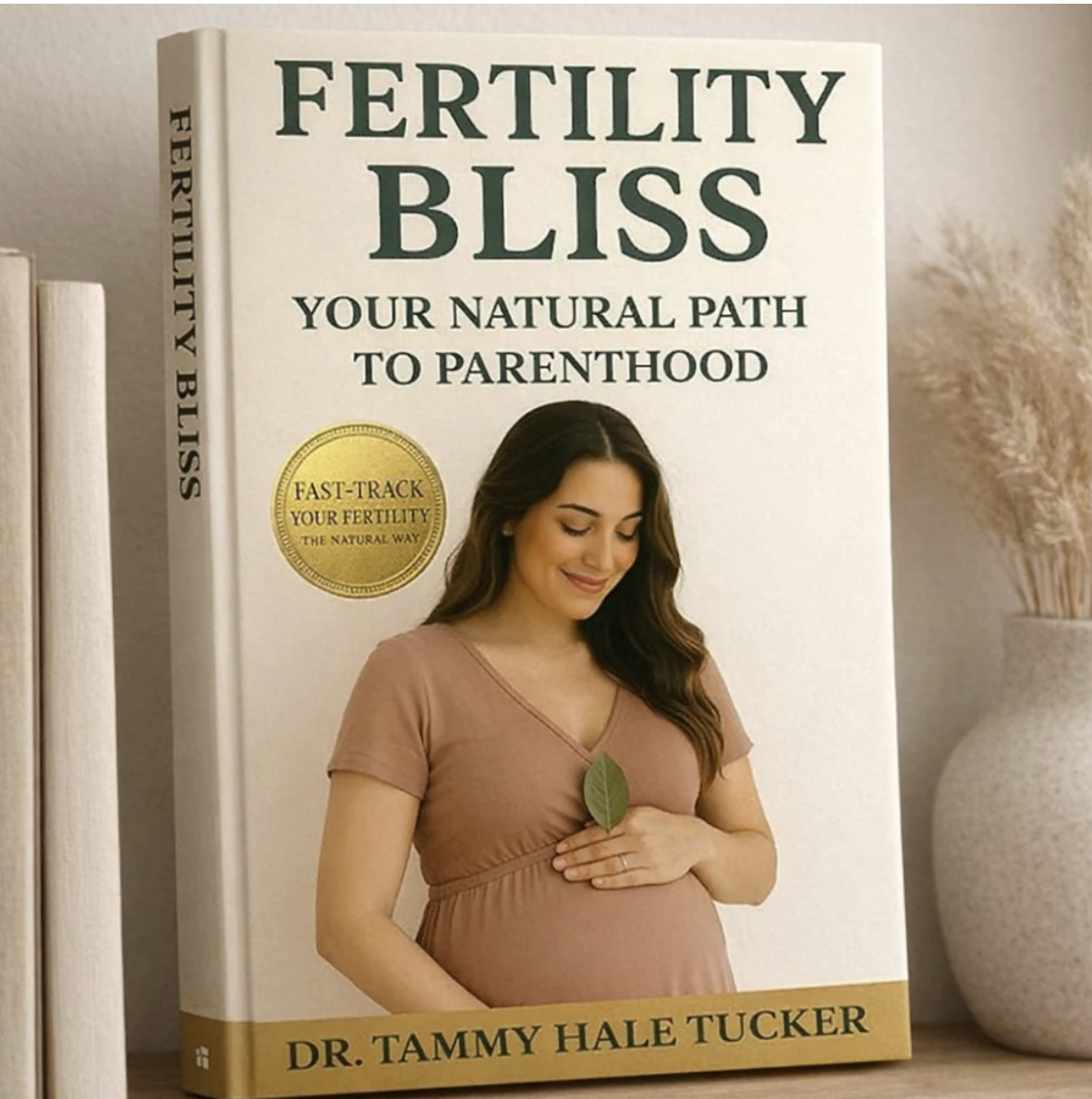
Fertility Bliss book by Dr. Tammy Hale Tucker
The Book

Fertility Bliss

Your Natural Path to Parenthood · Dr. Tammy Hale Tucker

The complete guide to balancing your hormones for conception — for the woman who's done being told to "just relax." Real protocols. Real biochemistry. Real path forward.

Get the book
Pass It On

Share this with someone who needs it.

Someone you love is quietly wondering if it's too late, if their cycle is normal, or how close they really are to menopause. This is the conversation that changes that.

Balance your hormones. Everything else follows.

Numbers turn symptoms into answers — at every age, in every phase.